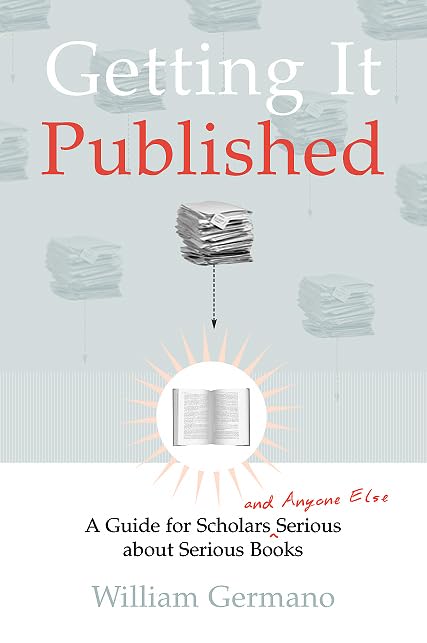
Writers and publishers depend on one another, but it often seems as if they speak two different languages. Getting It Published is a lively, insider's guide to academic publishing—a book that will tell you not only how publishing works, but how you can make it work for you. Written by a veteran editor with experience in both the university press and commercial worlds, the book fields the big questions in a scholar's life. Why do editors choose some books and decline others? How does a writer decide where to submit a project? How does the review process work, and why is it necessary? What can an author expect from a publishing house—before, during, and after publication? William Germano answers these questions and more, and along the way, offers encouragement, tips, and warnings. This savvy guide unravels the mysteries of publishing and walks you through the process from start to finish. You'll learn how to think about your book before you submit it and what you need to know about your contract. With wit and humor, Germano also addresses some of the finer points of publishing etiquette, including how—and how not—to approach a busy editor and how to work with other publishing professionals on matters of design, marketing, and publicity. Graduate students, recent Ph.D.'s, and experienced authors alike will appreciate the chapters on "Quotations, Pictures, and Other Headaches" and on compiling and editing collections and anthologies. "Scholarly publishing is a big, noisy, conversation about the ideas that shape our world," Germano writes, "Here's how to make your book part of that conversation." Addressing scholars seeking to publish nonfiction, former humanities editor Germano (VP, Routledge) assumes no knowledge on the part of his audience beyond their academic specialties. Suggesting that authors keep publishing procedures in mind while writing, he includes tips on editing, getting permissions for anthologies, and delivering the manuscript. Intended as ready reference (an index is promised), the book is brief enough to skim, which might prove fruitful in other ways. Unfortunately, the book lacks an appendix listing current university presses. Compared with the many overly long how-to-get-published guides for aspiring novelists, this is a concise and readable text with minimal fluff. Strongly recommended for academic and public libraries. Robert Moore, ITWorld.com, Southboro, MA Copyright 2001 Reed Business Information, Inc. Writers and publishers depend on one another, but it often seems as if they speak two different languages. Getting It Published is a lively, insider's guide to academic publishing a book that will tell you not only how publishing works, but how you can make it work for you. Written by a veteran editor with experience in both the university press and commercial worlds, the book fields the big questions in a scholar's life. Why do editors choose some books and decline others? How does a writer decide where to submit a project? How does the review process work, and why is it necessary? What can an author expect from a publishing house before, during, and after publication? William Germano answers these questions and more, and along the way, offers encouragement, tips, and warnings. William Germano is the author of several books, including Getting It Published: A Guide for Scholars and Anyone Else Serious about Serious Books , From Dissertation to Book , and On Revision , all published by the University of Chicago Press. His most recent book, co-written with Kit Nicholls, is Syllabus: The Remarkable, Unremarkable Document That Changes Everything . He has served as editor-in-chief at Columbia University Press, vice president and publishing director at Routledge, and dean of the Faculty of Humanities and Social Sciences at the Cooper Union for the Advancement of Science and Art, where he is now professor of English.