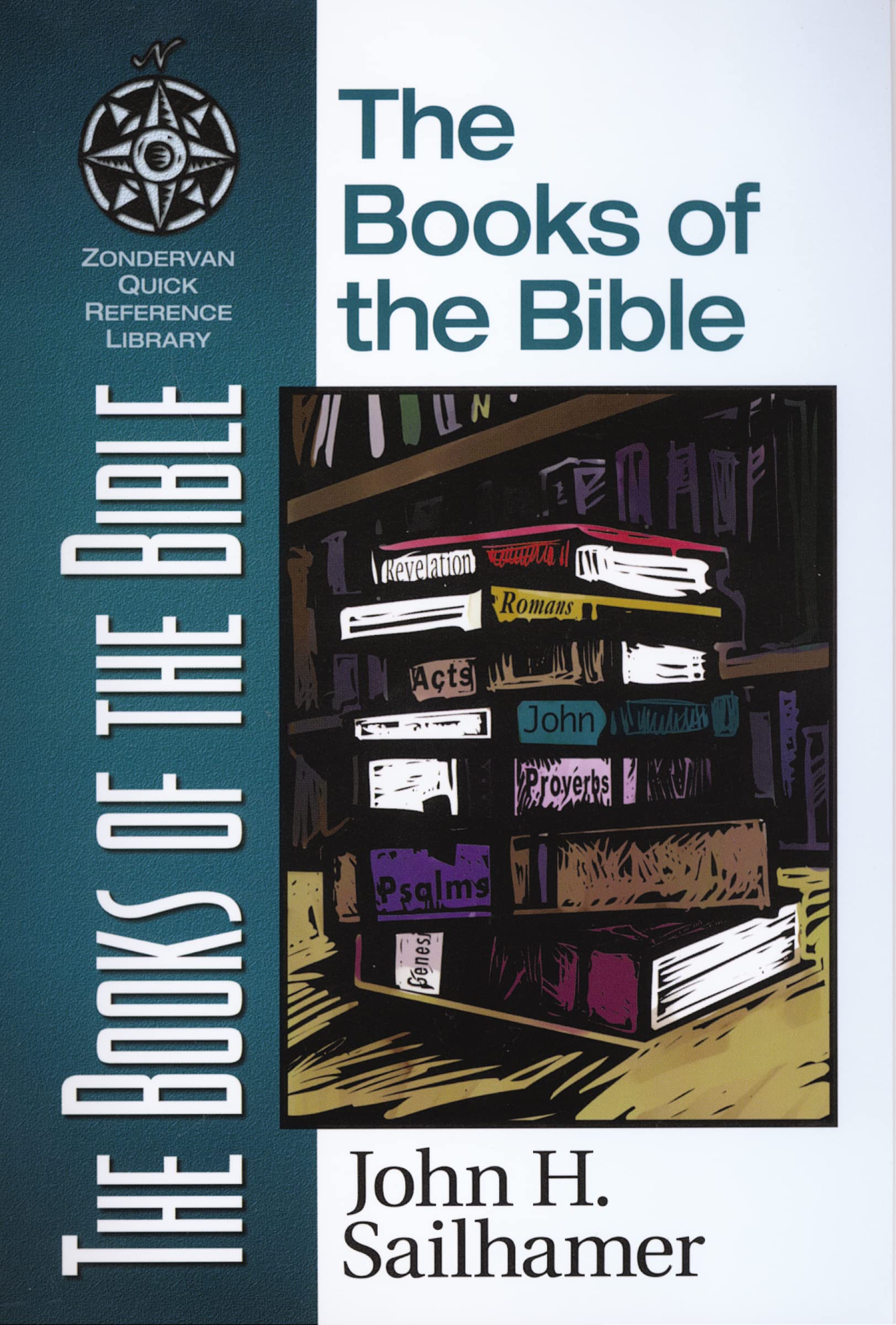
The Books of the Bible gives you an introduction to the Bible and an essential grasp of: The 39 Old Testament Books - The 27 New Testament Books - The shaping of both Testaments into the Bible you hold in your hands. When busy people want to know more about the Bible and the Christian faith, the Zondervan Quick-Reference Library offers an instant information alternative in a manageable length. Covering the basics of the faith and Bible knowledge in an easy-to-use format, this series helps new Christians and seasoned believers alike find answers to their questions about Christianity and the Bible. The Zondervan Quick-Reference Library makes important knowledge affordable, accessible, and easy to understand for busy people who don’t have a lot of time to read or study. The information in The Books of the Bible is presented in units of one or two pages, so that each section can be read in a few minutes. When busy people want to know more about the Bible and the Christian faith, the Zondervan Quick-Reference Library offers an instant information alternative. Covering the basics of the faith and Bible knowledge in an easy-to-use format, this series helps new Christians and seasoned believers find answers to their questions about Christianity and the Bible. The information is presented in units of one or two pages, so that each section can be read in a few minutes. The Zondervan Quick-Reference Library makes important knowledge affordable, accessible, and easy to understand for busy people who don't have a lot of time to read or study. John Sailhamer (Ph.D., UCLA) is scholar in residence at Northwestern College, St. Paul, Minnesota, and professor of Hebrew Scriptures at Western Seminary, Portland, Oregon. He is the author of the commentary on Genesis in the Expositors Bible Commentary, The Pentateuch as Narrative, the NIV Compact Bible Commentary, and Introduction to Old Testament Theology The Books of the Bible gives you an introduction to the Bible and essential grasp of - The 39 Old Testament Books - The 27 New Testament Books -- Turn here for exactly the kind of informative, easy-to-read overviews you're looking for. From theology, to biblical archaeology, to the life of Christ and more, each volume covers a topic of vital interest to Christians in handy, one-page bits of information. The Zondervan Quick-Reference Library is knowledgeable, fascinating, and helpful. It cuts time and hassle by taking you straight to the heart of the things you most want to know about Christianity -- one minute at a time. John H. Sailhamer is professor of Old Testament at Golden Gate Baptist Theological Seminary in Brea, California and was formerly senior professor of Old Testament and Hebrew at Southeastern Baptist Theological Seminary.. His other works include An Introduction to Old Testament Theology and The NIIV Compact Bible Commentary. GenesisThe book of Genesis is the introduction to the Torah and the rest of theBible. It introduces and develops the central characters and themes of the Biblestory. The main characters are God, humankind, and the chosen people, Israel;the main themes are human failure, divine grace, and hope.The narrative begins with God's creation of the world, including his specialcreation of human beings and his preparation of the land that he wished togive to his people, Israel (Gen. 1). This was a good land, and those whom he createdto dwell in and enjoy this land were put there to worship and obey him(ch. 2). Foolishly, the first man and his wife turned away from God, their Creator,and sought to find another way to life and prosperity (ch. 3). That way endedin divine judgment and death: the first couple was expelled from the garden Godhad made for them (ch. 3); their first child was a murderer (ch. 4); the first civilizationwas destroyed by a flood (chs. 6--9); and the first great city, Babylon,humankind's only hope apart from God, was abandoned in ruins (ch. 11).In the midst of that divine judgment, however, came the promise of graceand redemption. God's promise of a redeemer who would crush the head ofthe serpent (Gen. 3:15) strikes an early note of hope. This hope reverberatesthroughout the subsequent chapters of Genesis and finds its full exposition inthe last words of Jacob: a mighty conqueror would arise from the house of Judahand establish God's rule over all the nations (49:8--12). The lineage of thatpromised redeemer is traced from Eve to the family of Noah (ch. 5), to Shem(ch. 10), to Abraham (chs. 11--25), to Isaac (ch. 26), and to Jacob (chs. 27--50), finding its ultimate fulfillment in that mighty king from the house of Judah.When the nations were dispersed from the city of Babylon (Gen. 11),God chose Abraham and brought him back to the land prepared in creationand gave it to him and his descendants. From among those descendants, Godpromised to provide blessing for all humanity. Abraham would become a greatnation, God would bless that nation, and through it all the nations of the eart