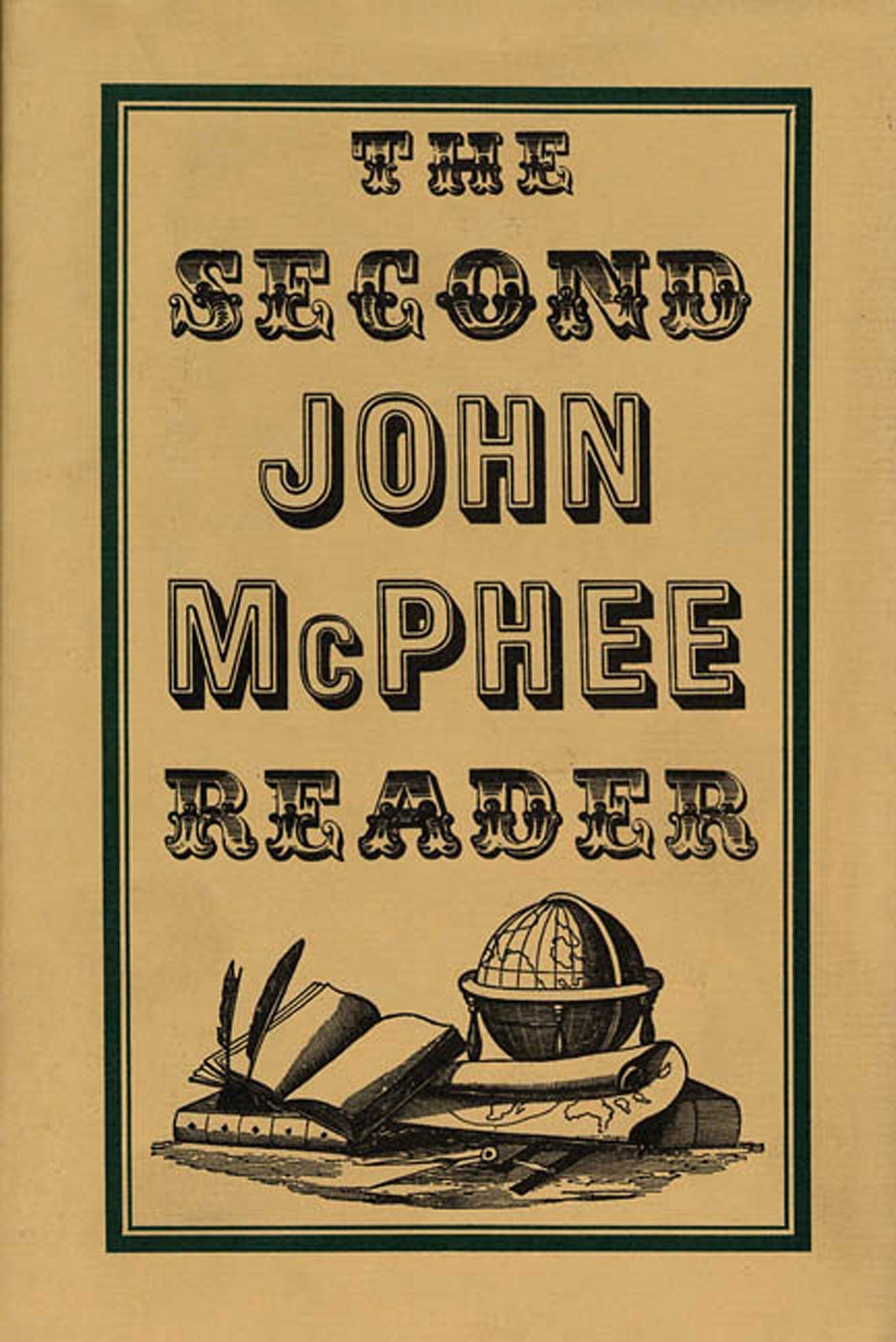
This second volume of The John McPhee Reader includes material from his eleven books published since 1975, including Coming into the Country, Looking for a Ship, The Control of Nature , and the four books on geology that comprise Annals of the Former World . Call it "new journalism" or "creative nonfiction," The New Yorker profiler McPhee is the quintessential master of the genre. This collection picks up where the first McPhee Reader (LJ 1/1/77) left off and gathers selections from 11 books published since 1975. Whether describing plate tectonics, marching with the Swiss army, or exploring the wilds of Alaska, McPhee draws the reader into the scene. Like a carpenter constructing a fine house, he selects his building materials carefully so that each part supports the others and contributes to the overall structure of the piece. The lifeblood of his writing comes, as in a novel, from his profiles of people and the stories spoken in their own voices. Highly recommended for public and academic libraries as a teaser introduction or a supplement to McPhee's unabridged works.?Cathy Sabol, Northern Virginia Community Coll., Herndon Copyright 1996 Reed Business Information, Inc. McPhee was the quintessential New Yorker essayist before Tina Brown took the helm. His enlightened, serious, yet playful essays showcased a narrative talent worthy of the best fiction writers. Twenty years after the first reader of his work comes this set of lengthy excerpts from 11 books published since 1975. The passages from Coming into the Country , his popular book on Alaska, include a harrowing account of a pilot who survived 80 days after a winter crash in the wilds of the Yukon. Other noteworthy extracts include, from Rising from the Plains , the story of Ethel Waxham, who arrived in Wyoming by stagecoach in 1905 to teach in a one-room schoolhouse; from Assembling California , two set pieces: one on the 1848 discovery of gold, the other on the 1989 Los Angeles earthquake; and from The Ransom of Russian Art , McPhee's profile of Norton T. Dodge, one of many eccentrics who populate McPhee's books and the man who smuggled to the U.S. what is perhaps the world's greatest collection of dissident artwork from Communist Russia. Benjamin Segedin John McPhee was born in Princeton, New Jersey, and was educated at Princeton University and Cambridge University. His writing career began at Time magazine and led to his long association with The New Yorker , where he has been a staff writer since 1965. Also in 1965, he published his first book, A Sense of Where You Are , with Farrar, Straus and Giroux, and in the years since, he has written over 30 books, including Oranges (1967), Coming into the Country (1977), The Control of Nature (1989), The Founding Fish (2002), Uncommon Carriers (2007), and Silk Parachute (2011). Encounters with the Archdruid (1972) and The Curve of Binding Energy (1974) were nominated for National Book Awards in the category of science. McPhee received the Award in Literature from the Academy of Arts and Letters in 1977. In 1999, he was awarded the Pulitzer Prize for Annals of the Former World. He lives in Princeton, New Jersey. David Remnick , the editor of The New Yorker since 1998, began his career at the Washington Post , in 1982. He is the author of several books, including The Bridge , King of the World , Resurrection , and Lenin’s Tomb , for which he received both the Pulitzer Prize for nonfiction and a George Polk Award for excellence in journalism. He became a staff writer at The New Yorker in 1992 and has since written more than two hundred pieces for the magazine. In 2015, he debuted as the host of the national radio program and podcast, “The New Yorker Radio Hour,” which airs weekly. Under Remnick’s leadership, The New Yorker has become the country’s most honored magazine, with a hundred and ninety-two National Magazine Award nominations and fifty-three wins. In 2016, it became the first magazine to receive a Pulitzer Prize for its writing, and now has won six, including the gold medal for public service.