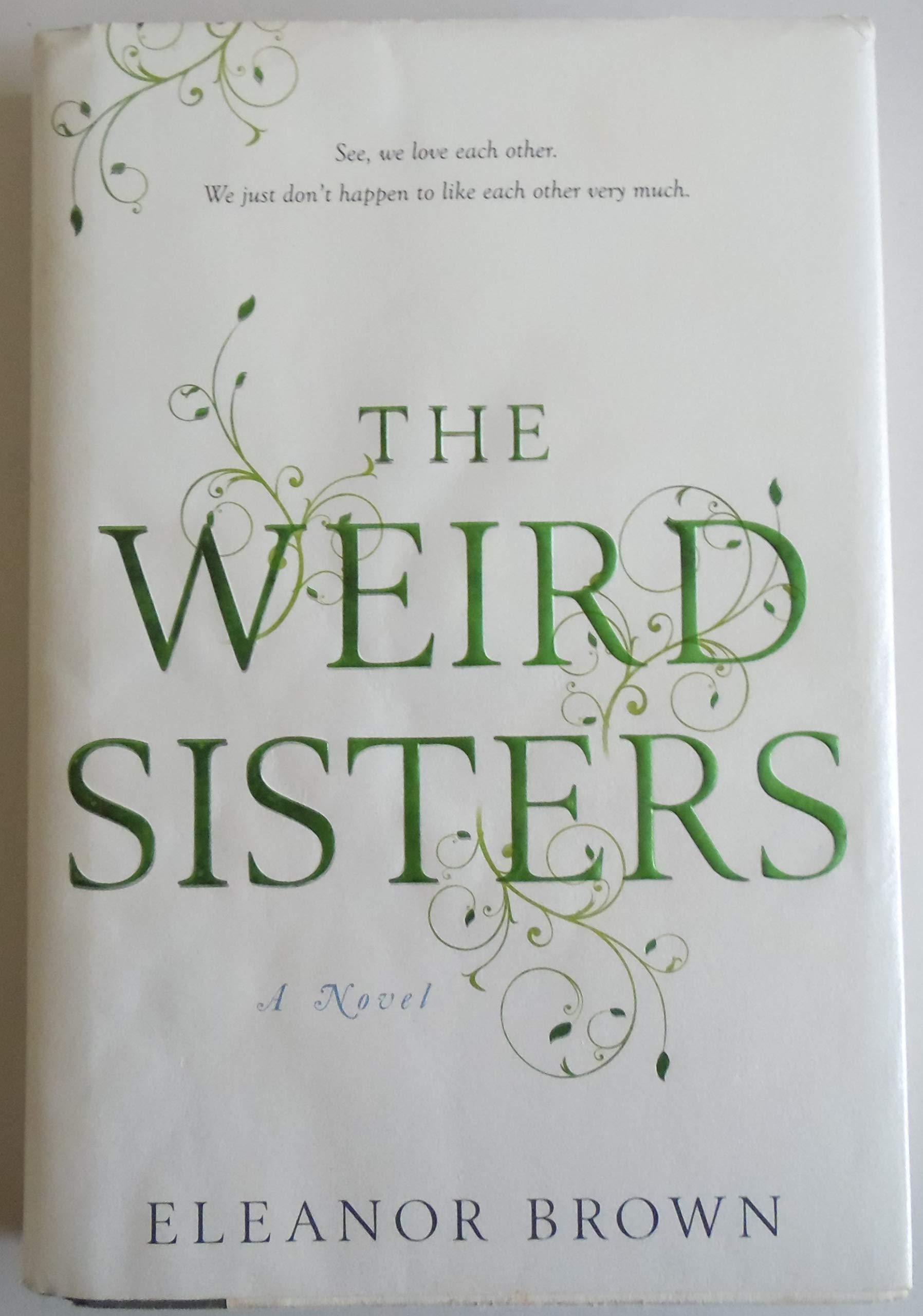
"There is no problem that a library card can't solve." The Andreas family is one of readers. Their father, a renowned Shakespeare professor who speaks almost entirely in verse, has named his three daughters after famous Shakespearean women. When the sisters return to their childhood home, ostensibly to care for their ailing mother, but really to lick their wounds and bury their secrets, they are horrified to find the others there. "See, we love each other. We just don't happen to like each other very much". But the sisters soon discover that everything they've been running from-one another, their small hometown, and themselves-might offer more than they ever expected. A major new talent tackles the complicated terrain of sisters, the power of books, and the places we decide to call home. Amazon Best Books of the Month, January 2011 : The Weird Sisters in Eleanor Brown's delightful debut could have been weirder, considering their upbringing. Their professor father spoke primarily in Shakespearean verse, and while other kids in the bucolic Midwestern college town of Barnwell checked the TV lineup, the Andreas girls lined up their library books. They buried themselves in books so completely that while they loved each other, they never learned to like each other much. And when adulthood arrived and they pursued separate destinies, each felt out of step with the world. When news of their mother's cancer makes a terribly convenient excuse for attention-hog Bean (Bianca) and Cordy (Cordelia), the “baby” who always got off easy, to boomerang back to Barnwell from New York and New Mexico, respectively, they return bearing the guilt (and consequences) of embezzlement and pregnancy-by-random-painter. They're most terrified of admitting these failures to Rose (Rosalind), the responsible eldest, who stayed in Barnwell to teach Math and cling to her caretaker-martyr role. With lively dialogue and witty collective narration, the sisters' untangling of their identities and relationships feels honest and wise, and the questions they raise about how we carry our childhood roles into our adult lives will resonate with all readers, especially those with their own weird sisters. --Mari Malcolm Three sisters, a scholarly father who breaks into iambic pentameter, and an absentminded but loving mother who brought the girls up in rural Ohio may sound like an idyllic family; however, when Rosalind, Bianca, and Cordelia return home—ostensibly to help their parents through their mother’s cancer treatment—readers begin to see a whole different family. A prologue introduces characters and hints of the dramas to come, while the omniscient narrator, seemingly the combined consciousness of the sisters, chronicles in the first-person plural events that occur during the heavy Ohio summer and end in the epilogue, which describes an (overly?) hopeful resolution. Brown writes with authority and affection both for her characters and the family hometown of Barnwell, a place that almost becomes another character in the story. A skillful use of flashback shows the characters developing and evolving as well as establishing the origins of family myth and specific personality traits. There are no false steps in this debut novel: the humor, lyricism, and realism characterizing this lovely book will appeal to fans of good modern fiction as well as stories of family and of the Midwest. --Ellen Loughran "Even if you don't have a sister, you may feel like you have one after reading this hilarious and utterly winsome novel. Eleanor Brown skillfully ties and then unties the Gordian knot of sisterhood, writing with such knowingness that when the ending came, and the three Andreas sisterswho had slunk home for a rest from themselves only to find to their horror their other two sisters there as welemerge, I sighed the guilty sigh of pleasure and yes, of recognition." Sarah Blake, best-selling author of The Postmistress "At once hilarious, thought-provoking and poignant, this sparkling and devourable debut explores the roles that we play with our siblings, whether we want to or not. The Weird Sisters is a tale of the complex family ties that threaten to pull us apart, but sometimes draw us together instead." J. Courtney Sullivan, best-selling author of Commencement " The Weird Sisters is a chronicle of real women, because it tells the truths of sisters. Eleanor Brown has written a compelling novel about love, despair and birth orderthe themes the Bard himself had claimed and burnished." Min Jin Lee, author of Free Food for Millionaires "Brown's knockout debut about the ties that bind us, the stories we tell ourselves, and the thorny tangle of sisterhood was so richly intelligent, heartbreakingly moving and gorgeously inventive, that I was rereading pages just to see how she did her alchemy. Brilliant, beautiful, and unlike anything I've ever read before." Caroline Leavitt, author of Pictures of You and Girls in Trouble Eleanor Brown