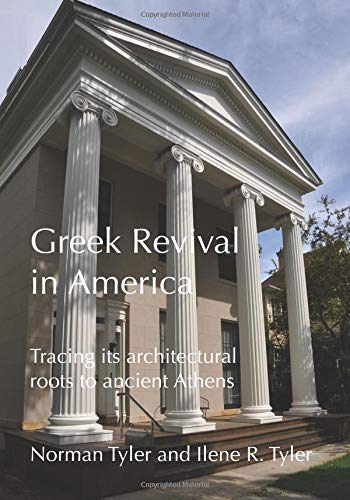
Authors and architects Norman and Ilene Tyler share with readers the thrill of discovering the historic significance of their house, referred to as "one of the finest Greek Revival houses in America." The account begins dramatically with the day one of the four large columns unexpectedly fell onto the front lawn, its capital shattered on the slate sidewalk. From this incident, they initiate research on the question of how and where the elaborately crafted columns were fabricated for their house during the early years of settlement in Ann Arbor, Michigan. They expand their research by visiting sites of other similar nineteenth-century Greek Revival residences in western New York State, and continue their odyssey with visits to the first Greek Revival structures in England, finally tracing the roots of their home to a particular ancient site they discover in Athens, Greece. Many books have been written about about Greek Revival architecture. However, no book has invited readers to trace back through history the genealogy of a single house over 2,500 years. The authors describe, step-by-step, how information is found from many different sources—history books, architecture books, pattern books, articles, interviews with local historians, and site visits in the United States and Europe—that reveals startling new interpretation of documented historical events to change forever the understanding and source of the Greek Revival style. The authors reveal startling new interpretations of historical events that change forever the understanding and source of the Greek Revival style, and describe how information is found from many different sources--history books, architecture books, pattern books, articles, interviews with local historians, and site visits in the United States and Europe. Architects Ilene and Norman Tyler share with readers the thrill of discovering the historic significance of their house, referred to as "one of the finest Greek Revival houses in America." Many books have been written about about Greek Revival architecture. However, no book has invited readers to trace back through history the genealogy of a single house over 2,500 years. The authors describe, step-by-step, how information was integrated from many sources--history books, architecture books, pattern books, articles, interviews with local historians. Travel with the authors on research trips in the United States, Britain, and Greece. Ultimately, the narrative presents a remarkable new interpretation of historical events that challenge common thinking on the source of the Greek Revival style. Published by Norman and Ilene R. TylerAvailable in softcover and on Kindle Norman Tyler has authored books on city planning, historic preservation, Greek Revival architecture, the history of transportation, and the Peace Corps. He has served on the board of numerous community and professional organizations, and has long been a community activist who ardently cares about making a difference. Norm has been recognized nationally as a professor and practitioner of urban planning, being inducted into the profession's College of Fellows. Now retired, he enjoys carpentry projects, playing piano and, of course, writing. When asked which of his books is his favorite, he replies, "My next one!" Ilene R. Tyler built her career as a preservationist through years of advocacy, writing, teaching, and leadership. As Director of Preservation in the Ann Arbor office of Quinn Evans Architects for twenty-eight years, she designed and documented numerous award-winning historic sites and structures. She has been inducted into the College of Fellows for both Architecture and Historic Preservation. She currently lives in Ann Arbor with her husband, co-author Norman Tyler, in the historic Robert S. Wilson house, and is active in local, state, and national/international preservation organizations. Her special interests include reading, weaving, and travel. Norm and Ilene enjoy traveling the world together. Find more on them at their web site: tylertopics.com