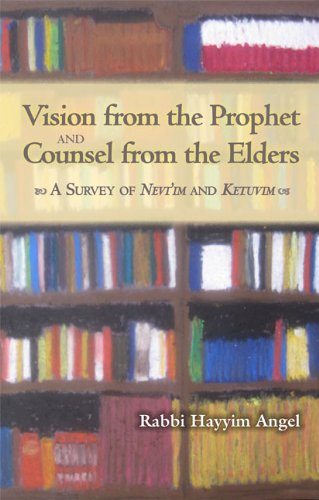
In this survey of Nevi im and Ketuvim, Rabbi Hayyim Angel achieves a rare combination of breadth and depth. While focusing on broad themes and universal messages, the treatment is far from superficial or perfunctory. Rabbi Angel presents one or more chapters on each book of Nevi im and Ketuvim, with each chapter analyzing in depth a representative aspect of the book. Using primarily peshat, the plain meaning of the text, Rabbi Angel marshals the Talmud and Midrash, traditional commentaries, and modern scholarship in expressing a view of Scripture that is creative as well as subtle and nuanced. With his direct and engaging style, Rabbi Angel conveys his erudition and wealth of knowledge to the reader in a most enjoyable fashion. We once discussed a chapter-by-chapter method to gaining familiarity with the Bible through the Nach Yomi Companion (link). OU Press (where I serve in an advisory capacity) has published another book that offers a very different kind of biblical overview. R. Hayyim Angel s Vision From The Prophet And Counsel From The Elders: A Survey Of Nevi im and Ketuvim provides an overview of Nakh, the Hebrew Bible excluding the Pentateuch. Meaningfully engaging the Prophets and Hagiographa in a single book is no small task. It requires a master pedagogue like R. Hayyim Angel, whose Yeshiva University classes on Bible are legendary. (See here for a review of one of his earlier books: link) The Bible contains a variety of literature books of prophecy, history, poetry and wisdom posing a significant challenge to anyone wishing to survey it all in a single volume. R. Angel s strategy is to explain some of the key themes in each book, occasionally discussing discrete sections within a book or analyzing specific texts. In this way, he allows readers access to some profundity and relevance of the Bible via deep commentarial study while still providing a brief overview to each book. As we have come to expect from R. Angel, the result is stunning. R. Angel resists the urge to summarize the story of historical books like Joshua and Judges. He instead highlights key themes, such as the contrast between Moshe and Yehoshua, as they appear throughout the books, incidentally surveying broadly the texts. R. Angel s first chapter on Judges explores the continuity between Joshua and Judges, how passages in the earlier book set the stage for the latter. His second chapter studies Gidon, marking him a transitional figure between the saintly judges in the first half of the book and the more challenging judges in the second half. Some chapters focus on moral or theological topics, such as Joshua s command to obliterate the Canaanites and Lamentations response to destruction. Learning the Bible without such studies misses the point. R. Angel accepts that some biblical characters are flawed, such as everyone but the title character in Ruth. I find this quickness to find fault a bit unsettling but recognize R. Angel s care in reading the text. The book of Jonah, when seen chapter by chapter, is a larger-than-life story of every individual who seeks closeness to God (p. 172) and the moral ambiguities encountered in confronting divine justice. R. Angel devotes considerable space to arguing that the traditional approach accepts multiple authorship of Psalms. In a bird s-eye overview of the entire book, he suggests an order to the collection of prayers. Psalms goes through a process of transition, bringing readers on a journey from a stable world, to instability, and then provides mechanisms for encouraging repentance, faith, and hope (p. 240). R. Angel s measured approach, his commitment to the text without discarding tradition, his command of commentaries without sacrificing originality, invites readers of all backgrounds to engage the Bible with an open but reverent mind. This masterful volume is an essential book, a gateway to Torah, to wisdom and to understanding, whether you read it on Shabbos or during the week. --~ Rabbi Gil Student, Torah Musings Nevi'im and Ketuvim, the books of the Prophets and Holy Writings, together with the Five Books of Moses, comprise the broad canvas on which the history, destiny and spiritual mission of the Jewish people are limned. Rabbi Hayyim Angel achieves a rare combination of breadth and depth. While forcusing on broad themes and universal messages, the treatment is far from superficial or perfunctory. Rabbi Angel presents at least one chapter analyzing in depth a representative aspect of the book. Using primarily peshat, the plain meaning of the text, Rabbi Angel marshals the Talmud --~ Jewish Action This scholarly, very readable, and informative book by a teacher of rabbinical students and advanced undergraduates at Yeshiva University is a superb book for anyone of any religion who wants to learn what the Bible is actually saying. Rabbi Angel examines the nineteen books of the Hebrew Bible that follow the five books of Moses, from Joshua through Chronicles, the prophets and