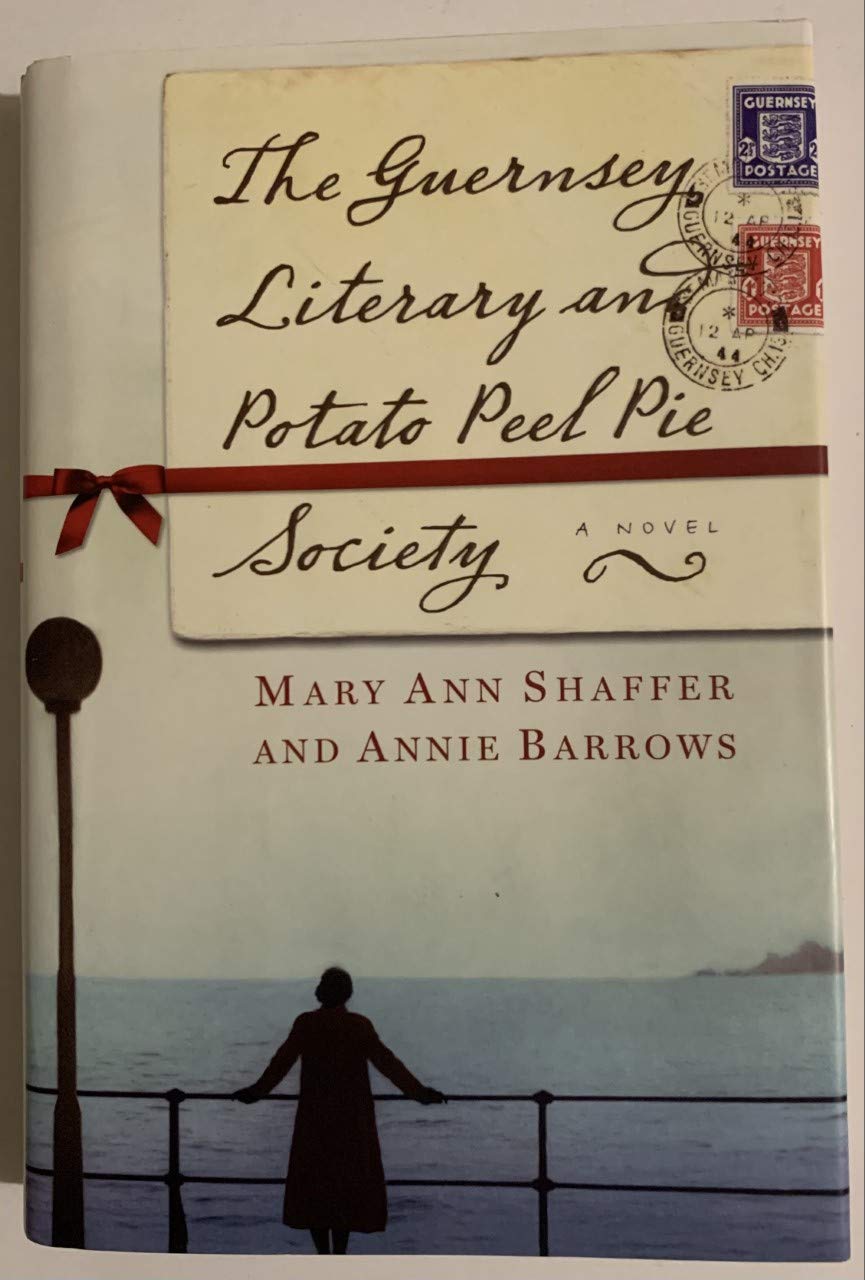
“ I wonder how the book got to Guernsey? Perhaps there is some sort of secret homing instinct in books that brings them to their perfect readers.” January 1946: London is emerging from the shadow of the Second World War, and writer Juliet Ashton is looking for her next book subject. Who could imagine that she would find it in a letter from a man she’s never met, a native of the island of Guernsey, who has come across her name written inside a book by Charles Lamb…. As Juliet and her new correspondent exchange letters, Juliet is drawn into the world of this man and his friends—and what a wonderfully eccentric world it is. The Guernsey Literary and Potato Peel Pie Society—born as a spur-of-the-moment alibi when its members were discovered breaking curfew by the Germans occupying their island—boasts a charming, funny, deeply human cast of characters, from pig farmers to phrenologists, literature lovers all. Juliet begins a remarkable correspondence with the society’s members, learning about their island, their taste in books, and the impact the recent German occupation has had on their lives. Captivated by their stories, she sets sail for Guernsey, and what she finds will change her forever. Written with warmth and humor as a series of letters, this novel is a celebration of the written word in all its guises, and of finding connection in the most surprising ways. “Traditional without seeming stale, and romantic without being naïve” ( San Francisco Chronicle ), this epistolary novel, based on Mary Ann Shaffer’s painstaking, lifelong research, is a homage to booklovers and a nostalgic portrayal of an era. As her quirky, loveable characters cite the works of Shakespeare, Austen, and the Brontës, Shaffer subtly weaves those writers’ themes into her own narrative. However, it is the tragic stories of life under Nazi occupation that animate the novel and give it its urgency; furthermore, the novel explores the darker side of human nature without becoming maudlin. The Rocky Mountain News criticized the novel’s lighthearted tone and characterizations, but most critics agreed that, with its humor and optimism, Guernsey “affirms the power of books to nourish people during hard times” ( Washington Post ). Copyright 2008 Bookmarks Publishing LLC Winding up her book tour promoting her collection of lighthearted wartime newspaper columns, Juliet Ashton casts about for a more serious project. Opportunity comes in the form of a letter she receives from Mr. Dawsey Adams, who happens to possess a book that Julia once owned. Adams is a member of the Guernsey Literary and Potato Peel Pie Society—no ordinary book club. Rather, it was formed as a ruse and became a way for people to get together without raising the suspicions of Guernsey’s Nazi occupiers. Written in the form of letters (a lost art), this novel by an aunt-and-niece team has loads of charm, especially as long as Juliet is still in London corresponding with the society members. Some of the air goes out of the book when she gets to Guernsey; the humorous tone doesn’t quite mesh with what the islanders suffered. But readers should enjoy this literary soufflé for the most part, and curiosity about the German occupation of the British Channel Islands will be piqued. --Mary Ellen Quinn “I can’t remember the last time I discovered a novel as smart and delightful as this one, a world so vivid that I kept forgetting this was a work of fiction populated with characters so utterly wonderful that I kept forgetting they weren’t my actual friends and neighbors. Treat yourself to this book please—I can’t recommend it highly enough.”—Elizabeth Gilbert, author of Eat, Pray, Love “Mary Ann Shaffer and Annie Barrows have written a wondrous, delightful, poignant book— part Jane Austen, part history lesson. The letters in The Guernsey Literary and Potato Peel Pie Society aren't addressed to you, but they are meant for you. It's a book everyone should read. An absolute treasure.”—Sarah Addison Allen, author of Garden Spells "A jewel...Poignant and keenly observed...A small masterpiece about love, war and the immeasurable sustenance to be found in good books and good friends."— People "It's tempting to throw around terms like 'gem' when reading a book like this. But The Guernsey Literary and Potato Peel Pie Society is not precious...This is a book for firesides or long train rides. It's a charming and timeless as the novels for which its characters profess their love."— San Francisco Chronicle Book Review “A book-lover's delight, an implicit and sometimes explicit paean to all things literary.”— Chicago Sun-Times “I’ve never wanted to join a [book] club as desperately as I did while reading The Guernsey Literary and Potato Peel Pie Society …. [The novel] is a labor of love, and it shows on almost every page.”–Yvonne Zipp, Christian Science Monitor "As the letters unfold, Juliet—and we readers—learn the little-known history of German occupation of Guernsey.